
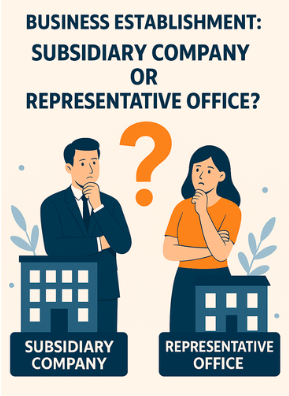
1. What is Business Establishment?
Definition of Business Establishment
Business establishment is the official process of registering and forming a legally recognized business entity in the country where the company will operate. This is the first and essential step for any investor wishing to start a business, build a company in Vietnam, or expand operations into this market. The process involves selecting a business structure, preparing the necessary documentation, completing procedures with the competent state authorities, and ultimately receiving the Enterprise Registration Certificate.
Types of Business Entities
There are several types of business entities that can be established in Vietnam, including limited liability companies (LLCs), joint-stock companies (JSCs), partnerships, and sole proprietorships. Each type has its own characteristics and requirements, suited to different business goals and strategies. For example, LLCs are popular among foreign investors due to their management flexibility and simplicity, while JSCs are often chosen when raising capital from multiple sources is needed.
Business Establishment Process in Vietnam
The process of establishing a business in Vietnam includes basic steps such as registering the company name, selecting business lines, preparing charter capital, and submitting required legal documents. Once these procedures are completed, the business will be granted an Enterprise Registration Certificate, which allows it to operate legally in Vietnam. Additionally, the company must register for a tax code, social insurance for employees, and fulfill other financial obligations to the state.
Benefits of Establishing a Business in Vietnam
Establishing a business in Vietnam offers many advantages, not only in terms of accessing a potential market of over 90 million people, but also through an increasingly reformed and investor-friendly environment. The Vietnamese government offers various incentives regarding taxation, land use, and support policies for enterprises in prioritized sectors. Notably, Vietnam is an attractive destination for foreign direct investment (FDI), thanks to its strategic location, low labor costs, and participation in numerous international free trade agreements (FTAs), providing significant opportunities for manufacturing, export, and investment activities.
Establishing a business in Vietnam—particularly for foreign investors—is a vital step toward gaining access not only to the Vietnamese market but also to other markets in Southeast Asia and globally.
Read more: Company Formation Services – Reliable & Fast at Wacontre
2. What is the Establishment of a Subsidiary?
What is a Subsidiary?
A subsidiary is a company that is established and owned by a parent company, which may own all or a portion of the subsidiary’s charter capital. While a subsidiary operates independently, it is subject to strategic, financial, and managerial control by the parent company. This is a common organizational structure for businesses seeking to expand their operations or enter new industries without affecting the core activities of the parent company.
Process of Establishing a Subsidiary in Vietnam
The process of setting up a subsidiary in Vietnam begins with registering the company name and selecting the type of business entity—typically a limited liability company (LLC) or a joint-stock company (JSC). Investors must prepare legal documents such as the parent company’s Enterprise Registration Certificate, proof of charter capital, information on the directors, and the intended business lines. Upon completion of the application application file, the subsidiary will be issued an Enterprise Registration Certificate and will be authorized to conduct business activities in accordance with Vietnamese law.
Advantages and Disadvantages of Establishing a Subsidiary

Advantages:
- Growth and Expansion: A subsidiary is an effective tool for businesses to expand into new areas without affecting the core operations of the parent company.
- Optimized Management: A subsidiary can operate independently, helping to reduce complexity in the parent company’s organizational and managerial structure.
- Enhanced Competitiveness: With a subsidiary, businesses can specialize in specific business areas, enabling stronger development in new markets.
- Separate Legal Entity: A subsidiary has independent legal status, allowing it to sign contracts, conduct financial transactions, and bear its own legal responsibilities.
Disadvantages:
- High Setup and Management Costs: Establishing a subsidiary requires a higher initial investment compared to other forms of investment. In addition, the parent company must assume responsibility for managing and supervising the subsidiary.
- Profit Distribution: The subsidiary is obligated to pay taxes and distribute profits in accordance with regulations. Profits cannot be transferred to the parent company before taxation, and such transfers are subject to financial controls.
- Complex Tax Management: A subsidiary must prepare its own tax reports, is subject to separate corporate taxation, and cannot transfer untaxed profits to the parent company, which adds complexity to financial management.
Is a Subsidiary Suitable for Foreign Investors?
A subsidiary is suitable for foreign investors who wish to expand their investment scale and engage in new industries without affecting the main activities of the parent company. It allows investors to protect their assets and capital while promoting growth in Vietnam’s dynamic business environment.
3. What is the Establishment of a Representative Office?
Definition of a Representative Office
A representative office is a dependent unit of the parent company, acting on its behalf to promote the company’s interests. It plays a key role in building relationships with customers and partners, conducting market research, and promoting products. However, a representative office does not have independent legal status and is not authorized to sign business contracts or engage in direct sales or financial transactions. This makes the representative office an effective tool for businesses to explore the market without engaging in direct commercial activities.
Process of Establishing a Representative Office in Vietnam
The process of establishing a representative office in Vietnam is relatively simple. Investors need to prepare a registration application file, which includes documents such as the parent company’s Enterprise Registration Certificate, proof of legal representation, and information on the head of the representative office. Once the application is approved, the representative office will be granted an Establishment License and may begin operating within the scope of its permitted functions.
Advantages and Disadvantages of Establishing a Representative Office

Advantages:
- Lower Costs: Compared to setting up a subsidiary, establishing and operating a representative office is significantly more cost-effective. Since it is not involved in commercial transactions, expenses are limited to office rent, employee salaries, and other administrative costs.
- Convenient Communication: A representative office enables the parent company to easily connect with and maintain relationships with potential customers and partners, without requiring a physical business presence in the area.
- Market Exploration: It serves as a useful tool for conducting market surveys and research in Vietnam, helping to understand consumer trends, customer requirements, and industry competition.
Disadvantages:
- No Business Function: A representative office cannot sign contracts, sell products, or carry out financial transactions. This limits the company’s ability to expand its business operations through the office.
- Limited Scope of Activities: Representative offices are restricted to promotional, marketing, and research activities. They cannot engage in profit-generating activities or product development, and therefore cannot directly generate revenue.
- Tax Limitations: Although representative offices are not required to pay business license tax due to their lack of legal entity status, they are restricted from conducting commercial transactions or generating taxable profits.
Is a Representative Office Suitable for Foreign Investors?
A representative office is suitable for foreign investors who wish to explore the Vietnamese market, promote their products, and build customer relationships without engaging in direct business activities. It is ideal for companies looking to enter a new market or test marketing strategies without bearing the higher costs associated with establishing a subsidiary.
Read more: A Comprehensive Guide to Representative Offices of Foreign Traders
4. Comparison Between a Subsidiary and a Representative Office
When foreign investors decide to expand their operations in Vietnam, they may choose between establishing a subsidiary or setting up a representative office, depending on their business objectives and strategy. Each form has its own advantages and disadvantages, and the decision depends on the specific needs of the enterprise.
Purpose of Establishing a Subsidiary vs. a Representative Office
Subsidiary: The primary purpose of establishing a subsidiary is to expand the scale of operations and generate profits from different business sectors without affecting the parent company’s core activities. A subsidiary has the authority to sign contracts, conduct commercial transactions, and is legally independent from the parent company.
Representative Office: The purpose of setting up a representative office is mainly to conduct market research, promote products, and build business relationships without engaging in direct commercial activities. A representative office cannot conduct business transactions or sign contracts; it only represents the parent company.
Benefits for Foreign Investors
Subsidiary:
- Rapid Growth: A subsidiary can quickly expand into new sectors and even develop its own brands, without impacting the parent company.
- Independent Management: A subsidiary can operate independently in its specialized field, increasing flexibility and responsiveness to market changes.
- Profit Generation: Subsidiaries can directly participate in commercial activities, generate profits, and contribute to the growth of the parent company.
Representative Office:
- Low Cost: A representative office involves significantly lower setup and operational costs compared to a subsidiary, which is ideal during the initial stage of market exploration.
- Time-Saving: Since it is not subject to the complex legal procedures required for a subsidiary, a representative office can be established quickly, allowing faster market access.
- Effective Brand Promotion: It helps increase market presence, providing opportunities to find local partners and customers without heavy investment in infrastructure.
Key Differences in Business Activities
A subsidiary has the legal right to engage in commercial transactions, sign contracts, and conduct profit-generating business operations. It is a separate legal entity and can grow and expand according to its own strategies.
➡️ A subsidiary is the ideal choice for investors who want to expand and develop new business areas, participate in commercial activities, sign contracts, and generate revenue. It operates independently with full legal status.
In contrast, a representative office does not have the authority to enter into sales contracts or engage in commercial transactions. Its primary functions are to represent the parent company, conduct market research, promote products, and build relationships with local partners.
➡️ A representative office is a suitable option for investors who only wish to explore the market, assess demand, and build relationships without engaging in direct business operations. It cannot sign contracts, sell products, or generate direct profits.
5. Business, Subsidiary, and Representative Office Setup Consulting Services
Establishing a business, subsidiary, or representative office in Vietnam can be challenging due to the complexity of documentation, licensing procedures, and regulatory compliance. Therefore, using professional consulting services is a key solution that helps investors save time, reduce costs, and ensure legal compliance throughout the establishment process.
Business Setup Consulting Services
Thanhlap.wacontre.com offers comprehensive consulting services for setting up businesses, subsidiaries, or representative offices in Vietnam. We assist investors from the planning stage, preparing application documents, submitting registration forms, to obtaining the official Enterprise Registration Certificate. Our services help investors save time and ensure that all legal requirements are fully and correctly fulfilled.
Benefits of Using Professional Consulting Services
Using consulting services helps investors minimize legal risks and expedite the setup process. The expert consultants at Thanhlap.wacontre.com support clients in understanding the legal framework for business establishment, choosing the appropriate type of business entity, and guiding them through the preparation of required documents. This helps investors avoid procedural errors, save time, and ensure full legal compliance when operating in Vietnam.
Why Choose Thanhlap.wacontre.com?
Thanhlap.wacontre.com is one of the leading providers of legal consulting services for foreign investors in Vietnam. We not only offer advisory services on setting up businesses, subsidiaries, or representative offices, but also support clients in addressing issues related to taxation, labor, business licensing, and other administrative procedures. With an experienced team of experts well-versed in Vietnamese law, we are committed to delivering cost-effective and practical solutions to our clients.
Consulting Process on Prohibited and Conditional Business Sectors
Selecting the right business lines is a critical part of establishing a company in Vietnam. Through our consulting services, investors receive guidance in identifying suitable business sectors while avoiding those that are prohibited or subject to special conditions. We provide detailed information on restricted industries to help investors avoid legal risks and choose appropriate sectors for their business. In addition, we offer support with business license applications, tax registration, and other related documentation.
Read more: Prohibited Investment Sectors: The Latest Regulations on FDI
If you have any questions, please contact our Hotline at (028) 3820 1213 or email us at [email protected] for prompt consultation and support. With an experienced team, Service thanhlap.wacontre.com is always ready to serve customers in the most enthusiastic and efficient manner. (For Japanese customers, please contact Hotline: (050) 5534 5505).